
If you work for 30 years, a two per cent difference in pension returns can reduce your final retirement nest egg by 40 per cent. The Rs 9-trillion National Pension System (NPS) seems to be delivering incrementally higher returns than the twice-as-large Employees' Provident Fund Organisation (EPFO), shows a Business Standard analysis of data over the last seven years for the two retirement fund bodies. An investor who put in Rs 100 in retirement savings seven years ago would have seen her NPS nest egg grow to Rs 182 by 2023, according to the analysis based on the Pension Fund Regulatory and Development Authority's recently released Handbook of National Pension System Statistics 2023.

The earnings of India Inc hit a record high in the 2022-23 (FY23) January-March quarter (fourth quarter, or Q4), compared with their poor showing in the previous two quarters of the financial year. The rise in earnings, however, is exclusively led by banking, financial services, and insurance (BFSI) companies. A better-than-expected showing by banks and non-bank lenders in Q4FY23 more than compensated for the earnings contraction in the non-BFSI space.

Tata Consultancy Services (TCS), the group's biggest cash generator, overtook Vedanta to become the highest dividend payer in India in FY23. The IT services major paid Rs 42,090 crore for FY23, up 167.4 per cent from Rs 15,738 crore for FY22. The 10 biggest payers together shelled out Rs 2.06 trillion for FY23, more than double the Rs 98,371 crore for FY22.

Reliance Industries (RIL) was the top-performing index stock on Friday (May 26) and closed the day with gains of 2.8 per cent, against a 1 per cent rise in the benchmark S&P BSE Sensex during the day. RIL's performance on the bourses on Friday was, however, an exception, and the stock has struggled to beat the broader market for nearly two years now. The company's share price is currently at the same level as in September 2021, while the benchmark index is up 6 per cent in the period.

The government is set to earn an equity dividend of nearly Rs 13,800 crore from the listed public-sector banks (PSBs), all 12 of them, for FY23, up 50 per cent from Rs 9,210 crore in FY22. This will be the highest ever dividend for the government from PSBs. The 12 PSBs in our sample are paying an equity dividend of nearly Rs 21,000 crore for FY23, up 53 per cent from Rs 13,710 crore for FY22.

The maintenance work will include operations such as removal of remaining gypsum and leachate handling operations among others. Based on this, the district administration has now allowed the firm to maintain the plant after five years.

The banking sector emerged as an outlier when the rest of India Inc witnessed a slowdown in earnings in FY23. The combined net profit of listed public and private sector banks was up 39.4 per cent year-on-year (YoY) last financial year and their share in India's gross value added (GVA) or gross domestic product (GDP) at factor cost rose to a record high of nearly 1 per cent up, from 0.8 per cent a year ago. Listed banks' combined net profit grew to Rs 2.36 trillion in FY23, from Rs 1.69 trillion a year ago. In comparison, India GVA at current prices was up 15.2 per cent YoY at Rs 247 trillion in FY23; it was around Rs 214 trillion a year ago.

After dipping by as much as 17 per cent in April, readymade garment (RMG) exports of all textile categories in India are showing signs of recovery in May. Exporters in Tiruppur are indicating a rise in rupee terms during the month, while it may take at least a month for volumes to be back in positive terrain. Among the global majors that are placing orders in the textile hub include Walmart, H&M (Hennes & Mauritz AB), Tommy Hilfiger and Target.

Led by Tata Motors and Tata Consultancy Services (TCS), the combined revenue of the Tata group's listed firms crossed the Rs 10-trillion mark for the first time, in 2022-23. The group's 14 key listed companies in which Tata Sons holds a direct equity stake reported a combined revenue of Rs 10.07 trillion in FY23, up 15.3 per cent from Rs 8.73 trillion in FY22. The combined net profit of these companies was, however, down 10.6 per cent year-on-year (YoY) at Rs 66,670 crore in FY23, from a record high of Rs 74,540 crore in the previous financial year, when the profit had jumped 156 per cent YoY, aided by Tata Steel's strong showing.
The decline in LIC's share price makes it the biggest wealth destroyer among IPOs which hit the market after COVID-19 took hold globally in 2020.

Thanks to a big payout by the group's cash cow, Tata Consultancy Services (TCS), Tata Sons is set to earn a record-high equity dividend worth nearly Rs 33,350 crore from the group's listed companies for FY23, up 130 per cent from Rs 14,529 crore in FY22. Nearly 90 per cent of this, or around Rs 30,500 crore, is estimated to accrue to Tata Sons while the rest will show up in its profit & loss account for FY24. This is because nearly 80 per cent of the dividend payout by TCS for FY23 was done before the end of the financial year through three quarterly interim instalments and a special one in January this year.

Prime Minister (PM) Narendra Modi has been at the forefront of climate action and saving the environment campaigns - whether plogging at a beach in Mahabalipuram in 2019 or wearing a sky-blue 'sadri' jacket to Parliament made of material recycled from plastic bottles. Made by Karur-based sustainable fashion brand EcoLine Clothing (EcoLine), a brand of Shree Renga Polymers, front runner in polyethylene terephthalate (PET) bottle recycling and sustainable textiles in India run by IITians, the company recycles PET bottles and upcycles them into value-added products, such as garments. Three months on, the phone lines of Senthil Sankar, managing partner at Shree Renga Polymers and EcoLine, have been ringing non-stop since the jacket made out of recycled plastic at Karur, Tamil Nadu's textile capital, was worn by the PM to Parliament on February 8.

Corporate India continues to be generous in rewarding its shareholders with big dividend payouts. This is especially true for shareholders of companies such as Tata Consultancy Services (TCS), Hindustan Zinc (HZL), and Coal India (CIL) which are seen as cash cows of large business groups and the government. Boosted by a big payout by these three companies, the combined equity dividend payout by listed companies was up 38 per cent year-on-year (YoY) to a record high of Rs 2.27 trillion in 2022-23 (FY23), compared with Rs 1.65 trillion in 2021-22 (FY22).

Vedanta Limited (Vedanta) helping its parent and group holding company Vedanta Resources to deleverage its balance sheet has started to strain its balance sheet. Vedanta's gross debt (consolidated) was up 24.3 per cent year-on-year (YoY) in FY23 and reached a six-year high of Rs 66,628 crore by the end of March. Similarly, its net debt went up 20.3 per cent YoY to Rs 45,706 crore at the end of FY23, up from Rs 38,228 crore a year ago; it was the highest since FY20.
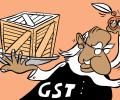
Taiwan in 1951 came up with an ingenious plan to improve tax compliance: citizens taking receipts for purchases could use them as lottery tickets. Customers were incentivized, and businesses found it hard to evade taxes. The plan's success prompted other countries, Slovakia and Greece among them, to launch similar initiatives. India doesn't seem to find the need yet for such schemes amid surging goods and services tax (GST) collections.

The growing mismatch between Go First's losses and other group companies' profits was making it tough for the group to fund the losses of the airline venture.

'Within a short span, it increased attendance, improved children's physical fitness, and led to a rise in the enrolment ratio.'

The early bird results for the January-March quarter of 2022-23 (Q4FY23) show a pick-up in earnings growth, despite a slowdown in revenue growth, thanks to a decline in input costs and lower provisioning for bad loans by banks. The combined net profit of 66 companies that have, so far, declared their quarterly results was up 15.2 per cent year-on-year (YoY) in Q4FY23, an improvement from 4.3 per cent YoY growth in Q3. Net sales growth of these companies, however, slowed down to 11.5 per cent YoY in January-March 2023, the slowest rate in eight quarters.

The recent sell-off in IT stocks such as Infosys and Tata Consultancy Services (TCS) has resulted in a sharp decline in the IT sector weighting in the Nifty50 index. The sector's weighting in the index has slipped to a five-year low of 12.2 per cent, down from the 17.7 per cent at the end of March 2022. The top IT companies - TCS, Infosys, Wipro, HCL Technologies, and Tech Mahindra - accounted for 13.6 per cent of the index at the end of March this year.

The Indian Space Research Organisation (Isro) on Thursday came out with the Indian Space Policy 2023 to promote greater private sector participation in the entire value chain of the space economy. According to the policy, Isro will encourage new-generation entities to participate in space exploration and human presence in outer space, including collaboration with domestic and international stakeholders. The policy also sets a road map for Isro to transition from manufacturing operational space systems to focus energies on research and development in advanced technologies.
 © 2026 Rediff.com - Investor Information - Advertise with us - Disclaimer - Privacy Policy - Sitemap - Feedback - About us - Terms of use - Grievances